


How We Work at Prosagro Export with Agronomists and Gulupa Growers in Colombia
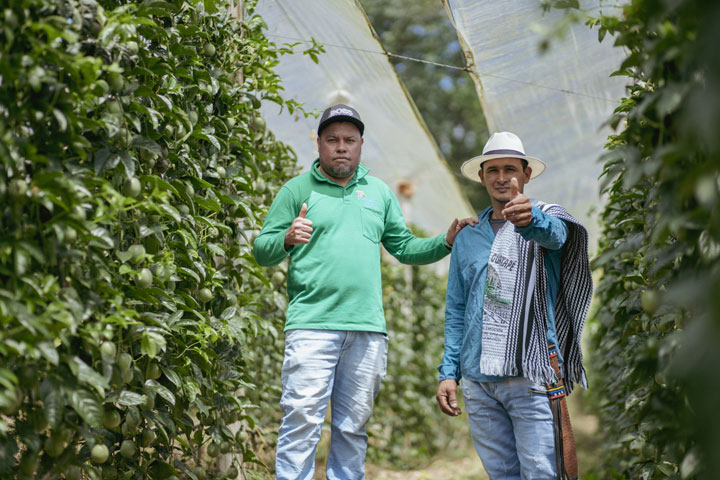
At Prosagro Export, every process and every partner is part of a mechanism that is never left to chance. Our working model between agronomists and growers is a daily effort of support and follow-up on their crops. Here we will explain how our technicians and growers work hand in hand at Prosagro.
Aquí encontrarás...
At Prosagro, the export of Colombian gulupa (purple passion fruit) does not begin at the packing plant, but on the farm, weeks or months before harvest. That is where our agronomists work alongside each partner grower, fine-tuning crop management, checking the condition of the plants and agreeing on a fair price before the fruit is ready. In this way we build, crop by crop, the quality our international clients demand.
Prosagro and its commitment to the Colombian countryside
Behind every box of gulupa exported from Colombia there is a network of growers, agronomists and administrative staff working in a coordinated way throughout the crop cycle.
At Prosagro Export, that joint effort is the foundation of our export model: we do not buy fruit at random on the market without traceability; instead, we support each partner grower, from planting through to international export
We work with partner growers in several departments of Colombia, providing permanent technical support throughout the gulupa crop cycle.
That support rests on two pillars: a fair price agreed with the grower and personalised technical advice from our agronomists in the field. A fair price without technical support does not guarantee export-quality fruit, and technical advice without stable economic conditions does not keep the grower in the programme over the long term either. The two go together.
Prosagro’s working model with gulupa growers and agronomists
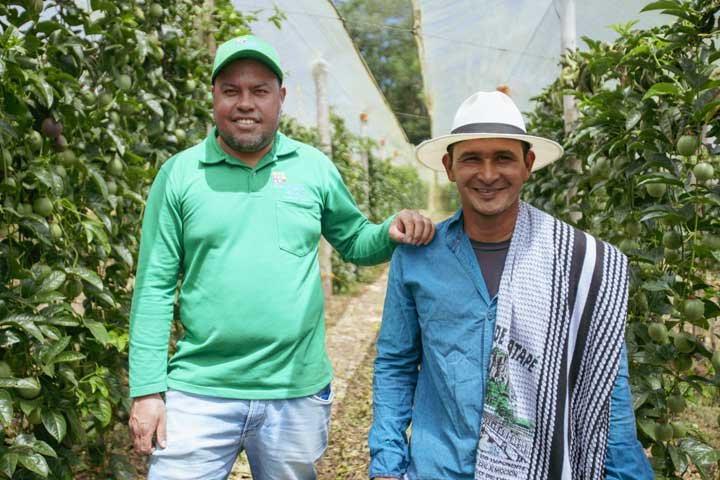
Prosagro Export’s model starts from a simple idea: export quality is built from the farm through to the packing plant. That is why, before signing an agreement with a new partner grower, our team of agronomists visits the plot and assesses the state of the soil, the age of the plants, the irrigation system and the crop’s phytosanitary conditions.
From that diagnosis, a specific management plan is defined for each farm, because altitude, humidity and soil type change from one municipality to another, even within the same department. A gulupa crop in Cundinamarca is not managed in the same way as one in Antioquia or Bolívar, and our agronomists adjust their recommendations to the reality of each piece of land.
That follow-up does not end with the first visit. Prosagro’s agronomists return to the farms regularly throughout the productive cycle — which in gulupa takes between eight and twelve months from planting to the first commercial harvest — resolving pest problems, nutritional deficiencies or irrigation issues before they affect yield.
Fair prices: the basis of a long-term relationship with the grower
One of the greatest risks for a gulupa grower in Colombia is price volatility.
When the domestic market falls, many growers end up selling their harvest below the cost of production, which pushes farming families to abandon the crop or to reduce investment in inputs and labour the following year.
At Prosagro Export we work with purchase agreements designed to give the grower stability: prices agreed in advance that recognise the technical work invested in each harvest and that do not depend solely on local market fluctuations. That predictability allows the farmer to plan the year, invest in maintaining the crop and support the family without depending on a single last-minute buyer.
For us, a fair price means predictable, punctual payment in line with the quality the grower delivers.
That economic stability also affects the quality of the fruit that reaches export. A grower who knows the harvest has a buyer and a defined price invests more calmly in fertilisation, pest control and post-harvest work, rather than cutting costs out of uncertainty. Fair price and quality reinforce each other, and it is that relationship that sustains Prosagro’s bond with its partner growers year after year.
Personalised advice: the agronomist’s role on each farm
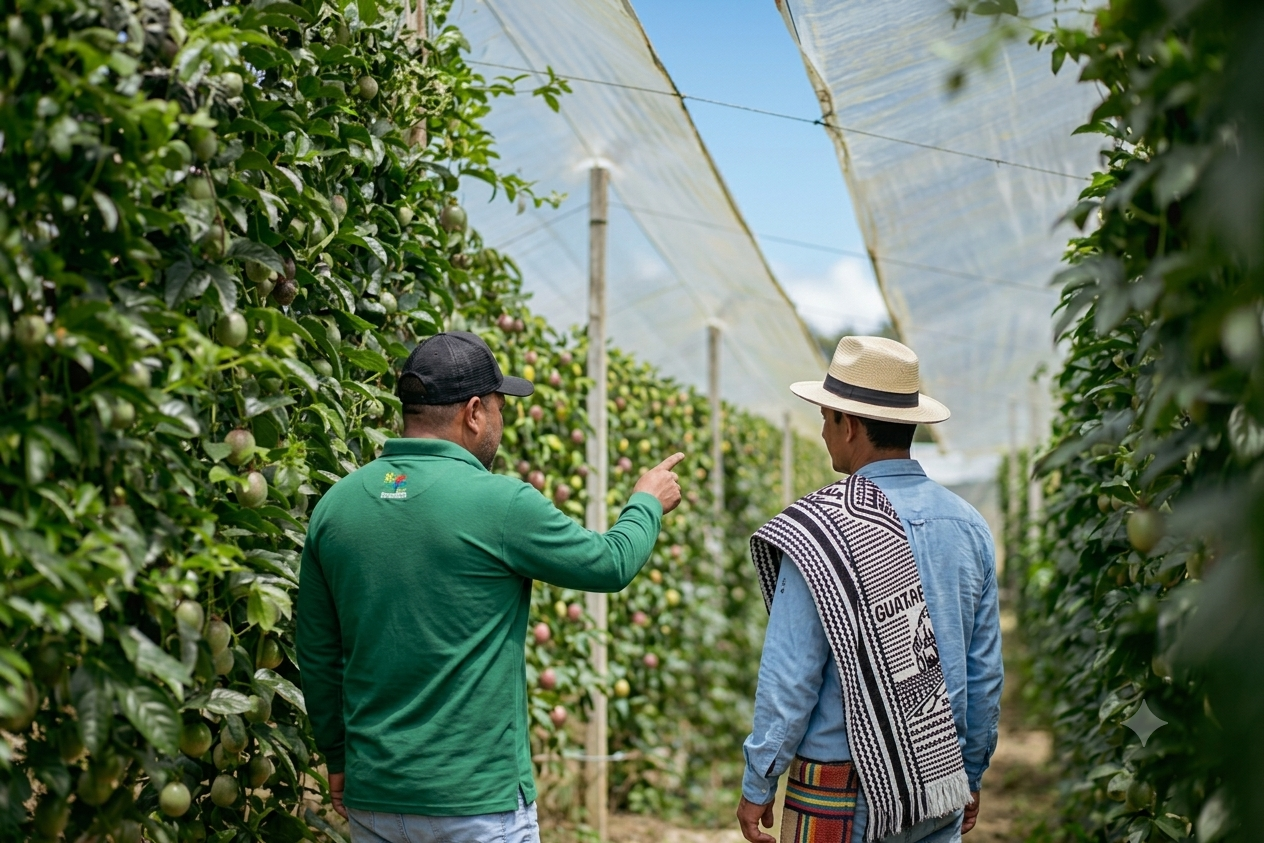
Prosagro’s technical advice is not summed up in the occasional visit. Each agronomist on the team is responsible for a defined group of farms and knows the productive history of each one: which pests have appeared, how the soil responds to fertilisation, at what time of year yield drops and which adjustments have worked in previous harvests.
A working process that goes from soil diagnosis to the crop management plan
The process begins with an analysis of the soil and the general condition of the seedlings.
With that information, the agronomist defines a fertilisation, irrigation and phytosanitary management plan tailored to the specific conditions of the plot — not a generic recipe for the whole region, but precise recommendations according to altitude, soil type and the age of the crop.
During the productive cycle, the agronomist monitors indicators such as the appearance of pests — for example the fruit borer or the fruit fly — symptoms of diseases such as fusariosis, nutritional deficiencies visible in the foliage, and the state of flowering, which determines the volume of the next harvest.
That constant support also builds trust. Many of our partner growers have worked with the same agronomist for several years, which makes communication easier and allows problems to be anticipated before they affect the harvest.
Good farming practices that partner growers learn
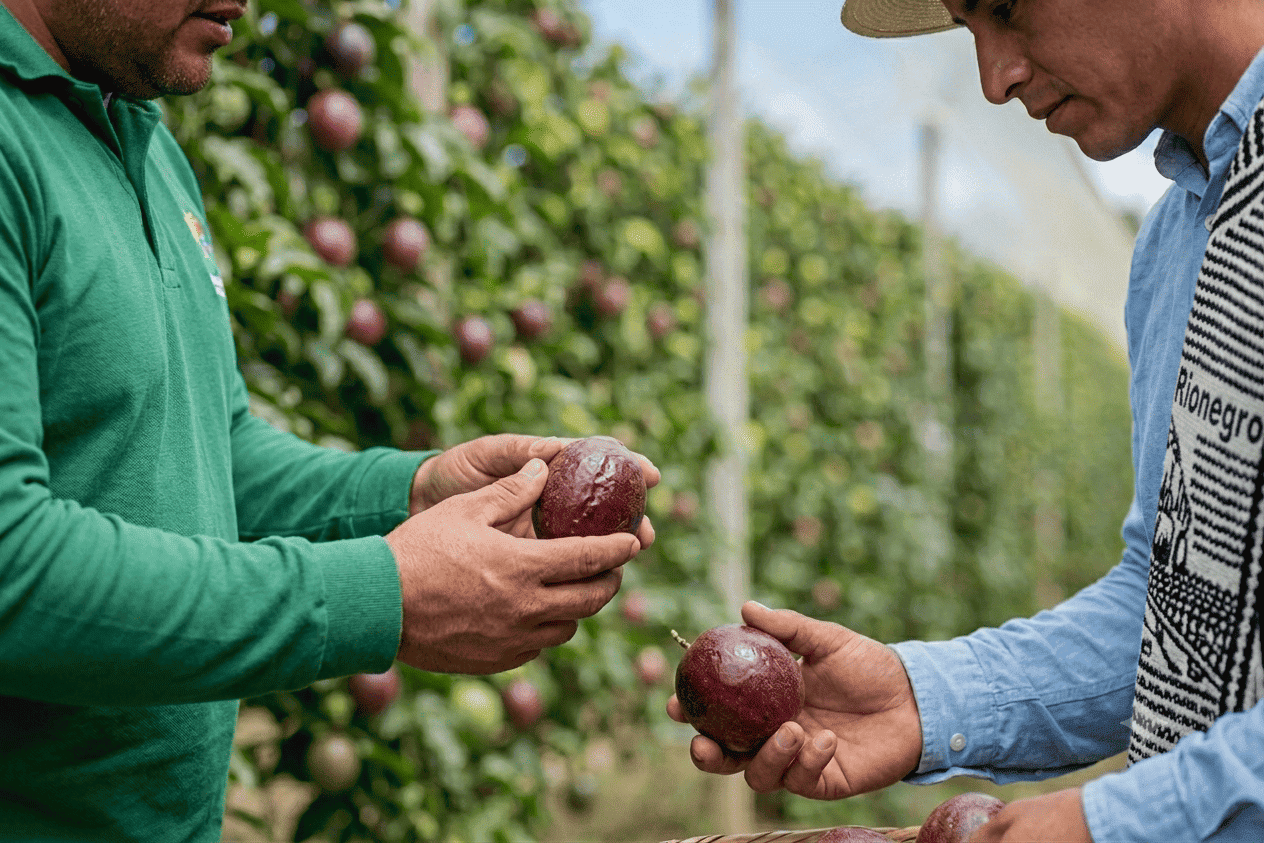
Exporting gulupa to demanding markets such as Europe means meeting standards that go beyond the fruit simply looking good. That is why a central part of Prosagro’s advice consists of training growers in Good Agricultural Practices (GAP): responsible handling of agrochemicals, record-keeping of applications, residue control, hygiene during harvesting and post-harvest handling.
Whether or not a batch of gulupa can be exported depends on these practices. International markets test for pesticide residues, require complete traceability from the farm to the container and apply strict phytosanitary protocols at the point of entry. A grower who does not apply GAP consistently puts an entire harvest at risk, no matter how good the fruit looks to the naked eye.
Our agronomists train partner farmers to export gulupa from Colombia, giving them all the resources for the processes, requirements and more.
Certifications and traceability for export
Prosagro’s partner growers progress towards certifications such as those of the ICA (Colombian Agricultural Institute) and, in several cases, towards the international certification schemes required by buyers in Europe and North America.
Each batch is identified and its origin can be traced back to the specific farm where it was grown, which provides guarantees both to our clients and to the health authorities of the destination countries.
From the farm to international markets
The joint work between agronomists and growers translates, at the end of the cycle, into fruit that meets the standards of size, colour, firmness and sanitary quality that export requires.
That Colombian gulupa then goes through grading, packing and cold-chain processes before reaching the international markets where Prosagro Export has a presence.
It is a process that directly connects a farmer in a rural community in Cundinamarca or Antioquia with a consumer in Europe who buys export-quality gulupa in a supermarket or a specialised shop. That chain only works if every link — from crop management to export logistics — maintains the same quality standard.
The impact on gulupa-growing families
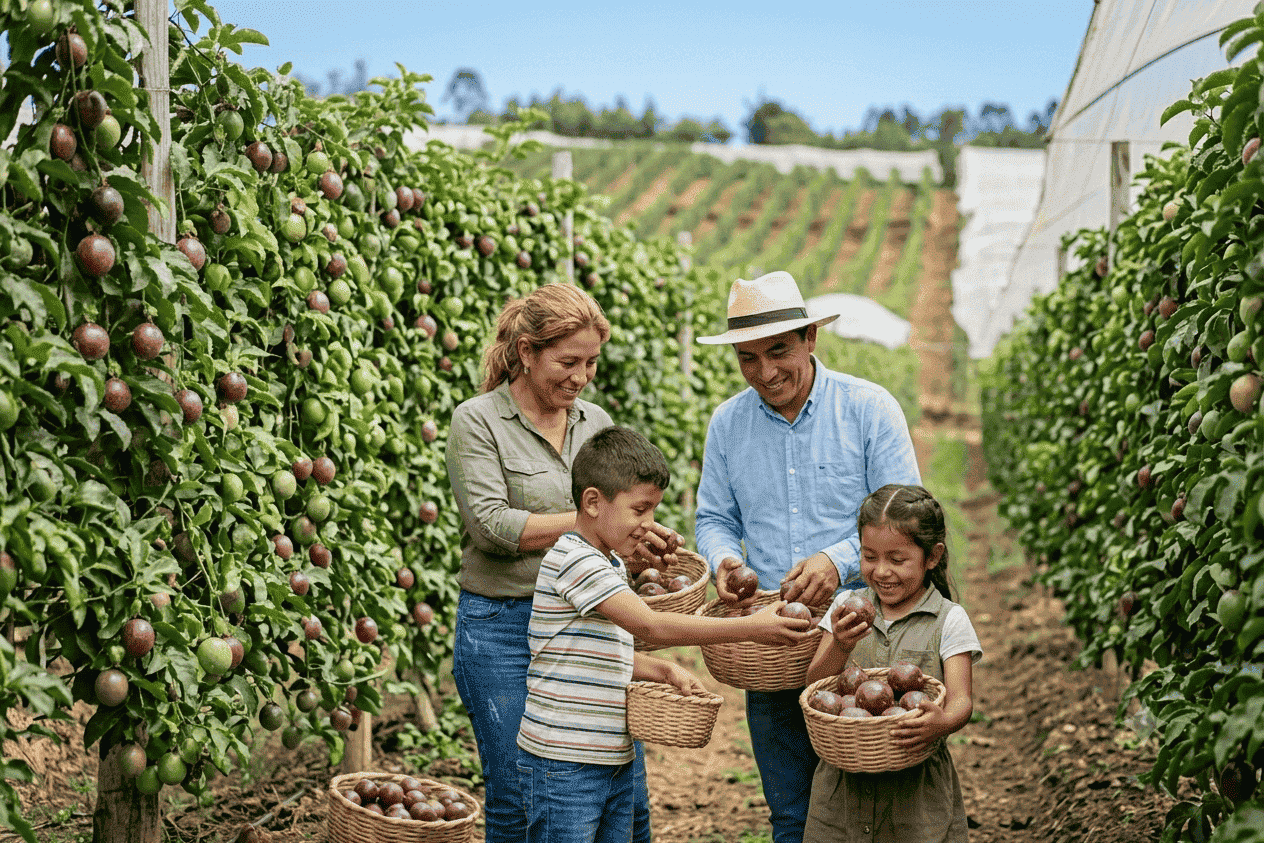
Beyond the export figures, this working model has a direct effect on the economy of the farming families who grow gulupa.
A stable, predictable income makes it possible to plan investments on the farm, improve housing, finance children’s education or expand the planted area without resorting to informal credit.
For Prosagro Export, sustaining this network of growers and agronomists is the foundation of how we understand the export of Colombian fruit.
Export-quality gulupa is only possible if the grower who cultivates it has fair conditions to keep doing so, harvest after harvest.
Let’s work together
If you are a gulupa grower and would like to know the requirements to join our group of partners, or if you represent a company interested in importing Colombian gulupa produced under this model of technical support and fair prices, get in touch. At Prosagro Export we continue to expand our network of growers and agronomists across different regions of Colombia.

